Traditionally, coaching resources are limited to executive teams. Leadership loneliness, high-pressure decisions, and heavy responsibilities put executives at the forefront of the need for meaningful coaching. But what about the rest of the workforce?
While executive coaching is a critical agenda item, democratized coaching presents an opportunity for company-wide growth. When coaching access is offered across all organizational levels, it drives innovation and productivity throughout the workforce.
Studies demonstrate significant returns on investment when company-wide coaching is implemented, with some studies showing a 7x ROI. A democratized coaching approach enables faster adaptation to change and fosters stronger cross-functional collaboration and communication. Most importantly, it breaks down traditional barriers to professional development, ensuring every employee has the opportunity to grow and excel. Here are some of the most compelling benefits of providing every employee with a coach.
Employee Engagement And Retention
Coaching has emerged as a transformative tool for talent retention and engagement in forward-thinking organizations. Companies that establish strong coaching cultures consistently report 87% higher engagement rates across their workforce.
Engagement and productivity are closely linked, and when employees become disengaged, productivity suffers. In 2024, only 21% of employees reported being engaged at work, which caused declines in productivity and profit. Companies with highly engaged employees, on the other hand, reported 23% higher profit margins than their peers.
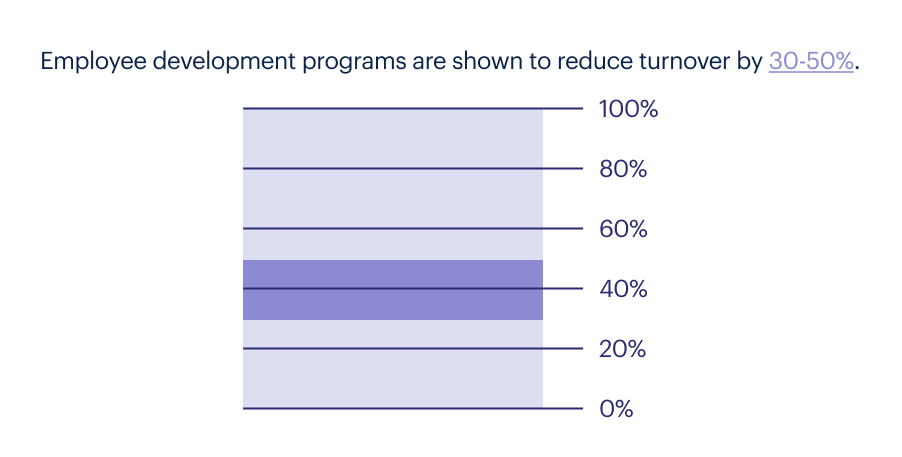
When left unaddressed, disengagement and low productivity can spiral into turnover. This is why employee development resources are so important for retention: coached employees are 64% more likely to remain with their organization for three or more years, and employee development can reduce turnover by up to 50%.

Coaching for retention gives employees a clear path to success, boosting engagement at work. One-on-one coaching provides employees with tools for upward mobility, such as identifying strengths and weaknesses, learning new skills to progress in the organization, and mastering communication skills. When employees recognize a meaningful path to progress, they’re more likely to stay and grow within an organization.
Closing The Skills Gap
The imperative for widespread coaching access has never been more pressing. Currently, 79% of employers face critical skills gaps, and projections indicate 44% of workers will require significant reskilling by 2027.
Rapid changes to the workplace, such as digital transformation agendas and the implementation of AI tools, make it difficult for a manager alone to upskill employees. Expert coaches can step in and help. Implementing outcome-based learning is one way that coaches teach employees strategic skills that align with organizational goals. Leadership can identify specific company-wide skills gaps—like effective communication or digital fluency—and use coaching to personalize learning paths for each employee. Through this coaching method, employees receive personalized support while meeting the high-level needs of the company.
Additionally, coaching is a great strategy for “just-in-time” learning. With coaches available at any time, employees can immediately apply new skills, creating a dynamic learning environment that responds to real-time challenges. This comprehensive approach builds adaptable workforces capable of meeting future challenges head-on, helping reduce burnout and ensuring organizational resilience.
Building A Culture Of Continuous Learning
Implementing organization-wide coaching is a fundamental shift toward a culture of continuous learning. Rather than one-time resources, like a mandatory class or webinar, ongoing coaching creates a growth mindset across all organizational levels. It supports both technical skill enhancement and the development of crucial soft skills essential for team collaboration. And when employees are open to learning, they’re more likely to reskill into new roles, improving internal mobility and retention.
Coaching has been shown to increase innovation through enhanced problem-solving capabilities and cross-functional teamwork. Perhaps most critically, a learning culture builds organizational resilience and adaptability, preparing companies to navigate a complex business landscape with confidence and agility.
The data is clear: democratizing coaching access is beneficial for everyone. Organizations that extend coaching beyond executive teams create stronger, more adaptable workforces while generating significant returns on their investment.
Every employee deserves the opportunity to reach their full potential through coaching support. Learn more about how TaskHuman can support coaching for all levels in your organization.